

How to Choose the Right Metal Roof Color for Your Home

Introduction
Selecting the right color for your metal roof isn’t just about curb appeal — it affects how your home feels, ages, and performs. With so many color and finish options available, it can be overwhelming to know where to start.
A professional metal roofing contractor will help homeowners narrow down their choices by understanding color families, performance characteristics, and architectural harmony. Below, we’ll walk through six main color categories, how heat and fading work, and what factors to consider when choosing your perfect metal roof finish.
1. The Six Categories of Metal Roof Colors
Every Sheffield Metals color can be grouped into one of six families:
Traditional, Gray Tones, Warm Tones, Accent Colors, Heat Reflective Colors, and Premium Finishes.
1. Traditional Colors
These are timeless choices that complement both historical and modern homes. (from left to right).
-
Matte Black: Sleek, modern, and striking against white trim or light siding. One of today’s most popular colors
-
Dark Bronze: The ultimate neutral — not black, not brown. Its tone resembles aged copper, making it ideal for warm exteriors, stone, or cedar. A historically accurate and “safe” color that never goes out of style.
-
Medium Bronze: Sits between black and brown with warmer and lighter undertones than Dark Bronze, bridging rustic and contemporary design styles.
-
Burnished Slate: Warmer with more brown tones than Dark Bronze, but darker than Medium Bronze.
-
Colonial Red: A nod to classic “Tinner’s Paint,” once used to coat traditional tin roofs and barns. Rich and warm with subtle rust undertones.
-
Patina Green: Mimics copper after decades of natural oxidation — perfect for historic or slate-accented architecture.
-
Hemlock Green: A darker, earthier green that resembles copper’s early patina stage.


2. Gray Tones
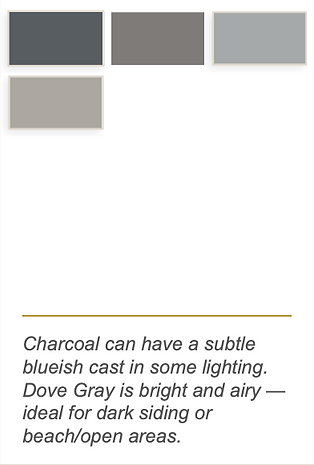
Gray metals are neutral, modern, and highly adaptable.
-
Charcoal Gray: The darkest gray, with subtle blue tones depending on light and surrounding colors.
-
Slate Gray: A balanced mid-gray without strong undertones — one of the most flexible color options.
-
Dove Gray: Lighter, softer gray that feels clean and airy, great for dark exteriors or coastal homes.
-
Ash Gray: Light soft gray with warmer tones than Dove Gray. Note: lighter shades will show more dirt in wooded areas but stay clean and crisp near open landscapes or beaches.

3. Warm Tones
Earthy, organic, and inviting — these complement natural materials like stone, brick, or cedar.
-
Mansard Brown: Deep, chocolatey, and rich.
-
Sierra Tan: Classic tan with subtle warmth.
-
Surrey Beige: True beige for mellow earth tones.
-
Sandstone: Lighter beige with hints of gray, often used to brighten traditional architecture.


4. Accent Colors
Perfect for standing seams, awnings, or bold statement roofs.
-
Burgundy: Purplish undertone, elegant and traditional.
-
Terra Cotta: Orangey-red with Mediterranean character.
-
Hartford Green: Deep, lush green that pair beautifully with natural stone.
-
Evergreen: Lighter. brighter green for a great accent.
-
Regal Blue: A bold blue for a bold statement.
-
Slate Blue: Liveliness of blue with soft-gray hues.
-
Regal Red: A vibrant, energetic red for high-contrast designs.


5. Heat Reflective Colors
Lighter colors with high solar reflectance help keep roofs cooler, especially in sunny, open environments.
-
Regal White: Brightest, cleanest white.
-
Solar White: White with soft warm undertones.
-
Stone White: Slightly gray-tinted, less glare.


6. Premium Finishes
For homeowners seeking metallic, textured, or weathered appearances.
-
Pre-Weathered Galvalume: A deep gray metallic resembling aged zinc.
-
Silver: Brighter metallic finish with cool undertones.
-
Copper (finish): A bright, orange-toned metallic ideal for accent roofs or commercial façades. A paint finish resembling natural copper.
-
Champagne: Brighter metallic finish with warm undertones.
-
Cor-Ten AZP Raw: Simulated “weathered” looks that mimic natural patina.
-
Acrylic-Coated Galvalume: Unpainted, showing the raw mill finish with its signature spangled surface.
-
Coreline Textured Low-Gloss Finishes: Matte, lightly textured colors (Black, Charcoal, Dark Bronze, Medium Bronze, Moonshine) that hide imperfections and create a subtle, sophisticated look.


2. How Color Affects Heat
One of the most common misconceptions is that color alone determines how “hot” a metal roof gets.
While it’s true that lighter colors reflect more sunlight, the metal’s emissivity (its ability to release absorbed heat) remains fairly consistent across colors because they’re all made from the same Galvalume base.
-
Dark vs. Light: Black roofs will absorb more solar radiation, but thanks to the air gap beneath panels and reflective coatings, overall heat transfer to the home is lower than most people expect.
-
Underlayment Protection: At Bonner Master Roofing, we use high-temperature ice & water shield underlayment, which resists heat and prevents asphalt bleed-through — a common problem with shingle-grade membranes.
-
Roof Design & Insulation: Proper insulation and attic ventilation matter far more than roof color when it comes to indoor temperature. Vaulted or low ceilings, especially in Cape Cod–style homes, will naturally radiate more heat downward regardless of color.

Tip: If heat reflection is a major concern, choose a color with a higher Solar Reflective Index (SRI) — but remember that very light colors show dirt more easily in wooded areas.
3. Will the Color Fade?
All exterior coatings — including car paint and siding — gradually fade over time from UV exposure. The difference is that Kynar 500® and Hylar 5000® PVDF finishes used on Sheffield Metals panels are the highest-grade coatings in the industry.
They resist chalking, fading, and discoloration for decades and carry a 40-year finish warranty.
Like any painted surface, it helps to occasionally clean your roof with a gentle wash to remove pollutants and keep the color fresh.
4. Tips for Choosing the Right Color
Match the Architecture
Historic homes look great with Dark Bronze, Colonial Red, or Patina Green. Modern homes shine with Matte Black or Silver.
Consider the Environment
Lighter colors work best near beaches or open spaces; darker tones hold up better around trees.
Review Samples in Sunlight
Always look at physical samples in the same lighting your roof will receive — morning and evening light can make colors appear completely different.
Coordinate with Trim & Siding
Your roof should complement the siding, not compete with it.
Think Long-Term
A roof can last 50+ years — choose a timeless tone you’ll still love decades from now.
5. The Bottom Line
Choosing your roof color isn’t just a design decision — it’s a blend of aesthetics, performance, and environment.
Whether you want a bold statement or a timeless classic, the right color can enhance your home’s beauty, value, and efficiency for decades to come.
If you’re not sure where to start, our team at Bonner Master Roofing can show you real-life samples, explain how different finishes perform, and help you visualize your options before you make the final call.